
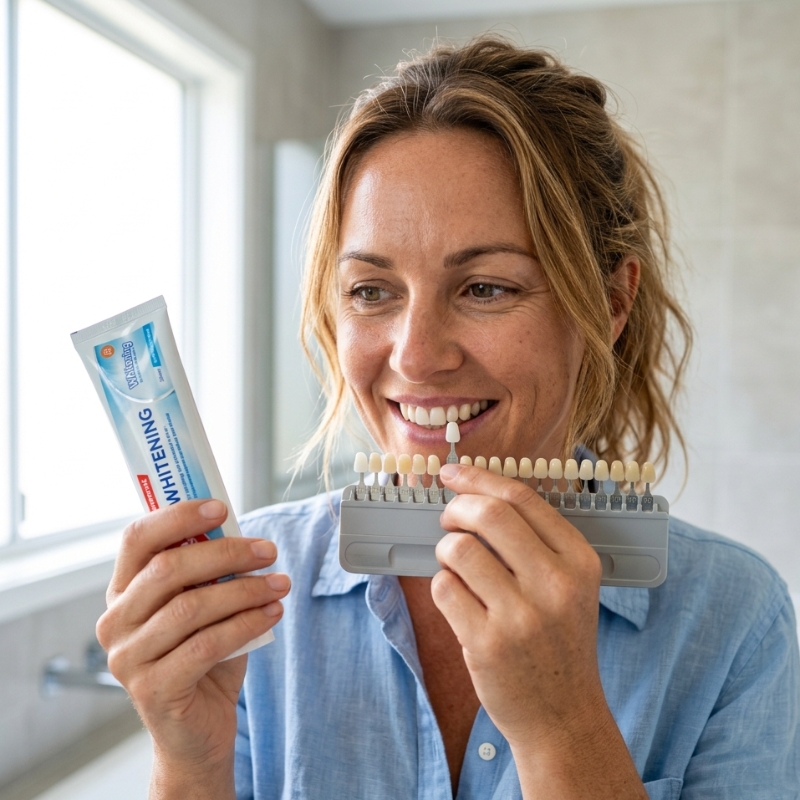
Even the most diligent brushers can look in the mirror one morning and notice a dull, yellow cast creeping across their teeth. Coffee, tea, red wine, tomato-based sauces and even certain medications can all leave stubborn stains, while the natural ageing process slowly thins enamel and reveals the darker dentine beneath. When the sparkle fades, many Sydneysiders head straight to the supermarket aisle for a whitening toothpaste, assuming a few weeks of minty scrubbing will do the trick.
But can a DIY paste really match the speed, depth and longevity of an in-chair whitening session at the dentist? The short answer is no, but that does not mean whitening toothpastes have zero value. They simply work in different ways, on different timelines and with different limitations. Understanding those differences can help you decide whether to persist with over-the-counter options, combine approaches or move straight to a professional treatment such as our teeth whitening service for faster, more predictable results.
Below we break down how each method works, what kind of stains it tackles, how long the brightness tends to last and which safety considerations matter most.
How Whitening Toothpaste Differs From In-Chair Treatment
Staining is rarely about a single event. It usually develops gradually through a blend of:
• Pigmented food and drinks (coffee, black tea, red wine, berries, soy sauce)
• Acidic beverages like soft drinks or kombucha that roughen enamel, making it easier for pigments to stick
• Smoking or vaping, which deposits tar and other coloured particles
• Age-related enamel thinning that exposes yellower dentine naturally
• Certain antibiotics or blood pressure medications that darken teeth internally
• Inadequate brushing and flossing that leave plaque to trap stains
Understanding the root cause matters. If pigments are sitting on the surface, gentle abrasion or peroxide can lift them. If the colour shift comes from internal dentine changes, you will likely need a stronger, dentist-grade peroxide to lighten from within.
How Whitening Toothpastes Claim to Work
Over-the-counter whitening toothpastes rely on one or more of the following mechanisms:
- Mild Abrasives
Hydrated silica or calcium carbonate gently scrubs the outer enamel to remove new surface stains. The Australian Dental Association caps abrasive levels to protect enamel, so the effect is gradual. - Tiny Concentrations of Peroxide
Some pastes include low (often below 0.1 percent) hydrogen peroxide. That is far weaker than professional gels containing up to 6 percent hydrogen peroxide or 18 percent carbamide peroxide allowed under Australian regulations without a prescription. - Optical Brighteners
Blue covarine dyes trick the eye by adding a subtle blue tint. This can make teeth appear whiter straight after brushing but fades quickly. - Tartar Control Agents
Ingredients like pyrophosphate help slow the build-up of tartar, which can otherwise look yellowish.
While these elements can freshen up a smile over several weeks, the results plateau once surface stains are gone. Deep or intrinsic discolouration usually remains.
Professional bodies including the Australian Dental Association, emphasise that non-prescription products have limited capacity to change the natural base colour of teeth. They are best viewed as maintenance or a light boost rather than a complete makeover.
What Happens During Professional In-Chair Whitening?
Professional whitening takes place under the supervision of a dentist who first checks for decay, cracks, gum problems or tooth sensitivity that need addressing before bleaching. A typical in-chair appointment involves:
• Isolating gums and lips with a protective barrier so high-strength gel only contacts enamel
• Applying hydrogen or carbamide peroxide gels in controlled cycles, sometimes activated by a specific light wavelength
• Monitoring shade shifts every 10–15 minutes and adjusting exposure to prevent sensitivity
• Adding desensitising fluoride treatments post-whitening if needed
• Advising on after-care and possible at-home top-ups, often via custom trays with lower concentration gel
Because the peroxide concentration is higher and contact time longer, oxygen molecules penetrate the enamel and break pigment bonds deep within. Many patients see their teeth brighten by several shades in a single hour-long visit, with further lightening over the next 24 hours as oxygen continues to work.
Whitening Toothpastes vs Professional Treatments: Side-by-Side Comparison
The biggest differences become clear when you line up each factor. Use the table below as a cheat-sheet when weighing your options.
| Factor | Whitening Toothpaste | Professional In-Chair Treatment |
| Main active mechanism | Mild abrasives, optical brighteners, very low peroxide | 4–6 percent hydrogen peroxide or 18 percent carbamide peroxide applied in cycles |
| Typical change in shade | 0–1 shade over 4–6 weeks of twice-daily use | 3–8 shades in one 60–90 minute session |
| Best suited for | Recent surface stains on healthy enamel | Deeper or long-standing stains, age-related yellowing, quick results |
| Sensitivity risk | Low but may irritate if over-aggressive brushing | Moderate; dentist can use desensitisers and adjust exposure |
| Enamel safety | Safe when used as directed, although overly abrasive formulas can thin enamel over time | Safe under professional supervision with gum and soft-tissue protection |
| Maintenance | Must keep brushing daily; results fade if habits remain | Periodic top-ups every 6–12 months, plus good home care |
| Cost factors | Similar to regular toothpaste, ongoing purchase | Higher upfront fee, fewer sessions needed |
| Time investment | 4+ weeks for noticeable change | Immediate boost, finished in one appointment |
| Personalisation | One-size-fits-all formula and brush time | Shade targets, gel strength and exposure customised to each patient |
The table highlights a key truth: whitening toothpaste is a slow, surface-level helper, while professional teeth whitening in the Blue Mountains offers an intensive in-chair treatment designed for deeper colour shifts.
Signs You Might Be a Candidate for Professional Whitening
Even if you started with toothpaste, certain clues suggest it may not deliver the brightness you want:
• Teeth look uniformly yellow rather than patchy or streaked, hinting at internal colour change
• Filling or crown edges stay dark while the surrounding tooth looks slightly lighter after weeks of brushing
• You have an event in less than a month (wedding photos, job interview) and need well-timed results
• Cold water triggers mild zings, showing that sensitivity is already present that a dentist can manage better
• You notice abrasive toothpastes making teeth feel rougher or gums appear irritated
When multiple signs line up, moving to a professional option can save frustration and prevent damage from over-zealous scrubbing.
Common Mistakes That Limit Whitening Results
Whether you stick with toothpaste, go professional or mix both, avoid these pitfalls that shorten the life of your new shade:
- Over-brushing With Hard Bristles
Aggressive scrubbing can erode enamel, exposing yellower dentine and actually darkening teeth. - Chasing Immediate Results With DIY Peroxide Hacks
Lemon juice, bicarb soda or strong bleaching strips purchased online may etch enamel or burn gums. - Ignoring Dietary Triggers
Sipping coffee, cola or red wine throughout the day constantly stains teeth. Use a straw where possible or rinse with water afterwards. - Skipping Professional Cleans
Hardened tartar blocks peroxide penetration. A scale and polish every six months maximises any whitening approach. - Using Coloured Mouthwashes Straight After Whitening
Some antiseptic rinses contain dyes. Wait 24 hours or choose a clear rinse to avoid immediate re-staining.
For a deeper look at misinformation that still circulates online, see our related blog on debunking common teeth whitening myths.
Safe Ways to Boost or Maintain Results Between Appointments
• Brush twice daily with a low-abrasion fluoride toothpaste and a soft bristle brush.
• Swap to a whitening toothpaste once or twice a year for two-week spurts to lift fresh surface stains.
• Use remineralising gels or high-fluoride toothpaste at night if you notice sensitivity creeping back.
• Drink dark beverages in one sitting rather than nursing them all morning to limit enamel exposure.
• Book a professional polish every six months so tartar does not trap pigments.
• Consider custom at-home trays dispensed by your dentist for gentle touch-ups without risking uneven bleaching.
Frequently Asked Questions
1. Can I use whitening toothpaste straight after a professional treatment?
Yes, but wait at least 48 hours and choose a low-abrasion formula. Your enamel may be temporarily dehydrated and more prone to sensitivity. Reintroduce slowly and monitor for any zinging sensations.
2. How long does professional whitening really last?
Results typically hold for 6–12 months, but diet, smoking, oral hygiene and natural enamel thickness all play roles. Some people book annual top-ups, while light coffee drinkers may stay bright for several years.
3. Will whitening toothpaste damage my enamel?
Most brands sold in Australia meet ADA guidelines for safe abrasive levels. Problems arise when people brush too hard or combine it with home remedies like bicarb soda. Gentle pressure and soft bristles are key.
4. Is professional whitening safe for people with sensitive teeth?
Often yes. Dentists can apply desensitising agents beforehand, shorten exposure times or use lower-strength gels in multiple visits. At-home trays with desensitising gel are another option.
5. Can crowns, veneers or fillings be lightened by either method?
No. Porcelain and composite do not respond to peroxide. Your dentist may recommend replacing or re-shading visible restorations after whitening natural teeth to ensure a uniform look.
Final Thoughts
Whitening toothpastes are a handy maintenance tool for surface stains and day-to-day freshness, but expecting them to deliver dramatic movie-star brightness sets most people up for disappointment. Professional in-chair whitening, on the other hand, targets deeper staining quickly and under controlled conditions, making it the go-to choice when you need predictable, faster and longer-lasting results.
If you are unsure which path fits your goals, lifestyle and budget, start by identifying whether your stains are surface or internal, review your timeline and consider any tooth sensitivity. A brief chat with your dentist will clarify the safest, most effective next step so you can smile with confidence.