
If you are weighing up whether to pay a dentist for whitening or just grab something off the chemist shelf, the honest answer is that professional whitening is usually quoted two ways, in-chair or take-home, and the price difference reflects real differences in how each one works. This article breaks down the three ways people whiten their teeth, what you are actually paying for with the professional options, why results vary so much between people, and the questions worth asking before you book. Blue Mountains Dental & Implant Centre offers teeth whitening at our Wentworth Falls clinic, and the aim here is to help you decide whether the professional route is worth the difference for you.
Professional whitening is usually quoted two ways: a single in-chair appointment, or a take-home kit with trays made to fit your teeth. The in-chair option costs more because it is done in one supervised visit at a higher concentration; the take-home kit costs less and works over a couple of weeks.
The three ways people whiten teeth
There are broadly three routes to whiter teeth, and understanding what separates them explains most of the price difference.
Supermarket and chemist products are the cheapest and most accessible. Whitening toothpastes, strips and paint-on gels are sold without any dental involvement. They use lower concentrations of whitening agent, come in a one-size-fits-all format rather than being matched to your mouth, and the results tend to be modest and slower. For light surface staining some people find them worthwhile, but there is no assessment of whether your teeth are suitable first.
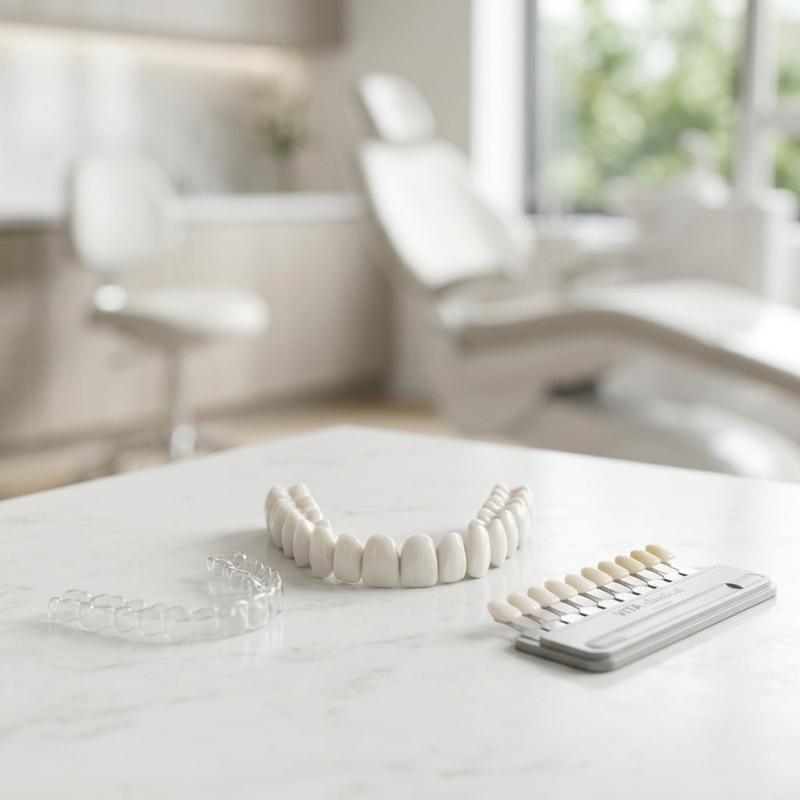
Dentist-supplied take-home kits sit in the middle. The dentist takes an impression or scan of your teeth and makes custom trays that fit your mouth exactly, then supplies a professional-grade gel to use in them at home over a couple of weeks. The custom fit keeps the gel on the teeth and off the gums, which matters for both results and comfort.
In-chair treatment is done in the practice in a single supervised appointment, using a higher concentration of whitening agent than you could safely use yourself at home. Because it is applied and monitored by the dental team with your gums protected, it works faster and in one visit, which is part of why it costs more. Each step up the three adds either a custom fit, professional supervision, or both.
What you are actually paying for with professional whitening
When professional whitening costs more than a box from the chemist, it helps to see what that difference actually buys, because it is not simply a markup on the same product.
First, you are paying for custom trays made to fit your own teeth. Taken from an impression or scan of your mouth, these hold the gel against the teeth and away from the gums, which a generic tray or strip cannot do as precisely. Second, you are paying for a higher concentration used under supervision. Stronger gels get results faster, but they need to be handled properly, which is exactly why they are applied or supplied by a dentist rather than sold freely.
Third, and this is the part people overlook, you are paying for a shade assessment beforehand and a check that your teeth and gums are healthy enough to whiten. The dentist records your starting shade so there is a real reference point, and more importantly, looks for anything that would make whitening a bad idea right now, such as untreated decay, gum problems, or exposed sensitive areas. Whitening over an existing problem can cause pain or make the problem worse, so this check is not a formality. In short, the professional price covers the fit, the strength, the supervision and the safety check, not just the gel itself.
Why results differ between people
One of the most common frustrations with whitening is that two people can have the same treatment and get noticeably different results, and there are real reasons for that.
The biggest factor is the kind of staining you have. Staining from food and drink, the surface discolouration from coffee, tea, red wine and the like, generally responds well because it sits on and near the enamel. Staining from inside the tooth, which can come from certain medications, injury or just the natural ageing of the tooth, behaves differently and does not always lift the same way, because the colour is coming from deeper within the tooth structure rather than the surface.
There is also one fact worth knowing before you start: fillings, crowns and veneers do not change colour. Whitening works on natural tooth enamel only, so any dental work you already have will stay exactly the shade it was made. If you have a crown or a white filling on a front tooth, whitening the teeth around it can leave it looking different, which is something to discuss beforehand. If you are curious about why teeth discolour in the first place, our article on why teeth look yellow even when they are clean goes into what actually changes the colour of a tooth.
Sensitivity, and who should not whiten
Some sensitivity during and shortly after whitening is common, and for most people it is temporary and settles down on its own within a short time of finishing. It usually shows up as a brief twinge with cold or air rather than lasting discomfort. If you already have sensitive teeth, it is worth telling your dentist before you start, because it changes how the treatment is planned and paced.
Whitening is not suitable for everyone or at every time, though. It is not recommended when there is untreated decay or active gum disease, because the gel can reach areas it should not and cause pain or aggravate the problem, which is part of why the pre-treatment check matters. It is also not recommended during pregnancy, as a sensible precaution. If sensitive teeth are your main concern, our guide to whitening when you have sensitive teeth covers the gentler options worth considering.
What to ask before booking
A few questions upfront will tell you whether whitening is right for you and what you are committing to:
- Which method is being quoted? Confirm whether it is in-chair, a take-home kit, or a combination, since that drives both the cost and the timeframe.
- How much change is realistic for my teeth? Ask what sort of result is achievable given your particular staining, rather than assuming a dramatic shift.
- Do I need a check-up first? Find out whether an examination is needed before whitening to confirm your teeth and gums are healthy enough.
- What happens if I get sensitivity? Ask how sensitivity is managed and whether the plan can be adjusted if it bothers you.
- How long do results usually hold? Understand what maintenance looks like and whether top-ups are expected, so there are no surprises later.
Clear answers to these let you compare the professional option against a chemist product on a fair basis, knowing exactly what each one does and does not include.
Frequently Asked Questions
Why is whitening at a dentist more than a chemist kit?
You are paying for trays made to fit your own teeth, a higher concentration used under supervision, and a check that your teeth and gums are healthy enough to whiten safely.
Does whitening work on crowns and fillings?
No. Whitening changes natural tooth enamel only. Crowns, veneers and fillings stay the colour they were made, which is worth knowing before you start if you have any at the front.
Will whitening make my teeth sensitive?
Some sensitivity during and shortly after treatment is common and usually settles. Tell your dentist if you already have sensitive teeth, because it changes how the treatment is planned.
How long do whitening results last?
It depends heavily on what you eat and drink and whether you smoke. Coffee, tea and red wine will shorten it. Many people top up with a take-home kit rather than repeating the full treatment.
Deciding whether it is worth it
What drives the cost of professional whitening is the custom-fitted trays, the higher-strength gel used under supervision, and the assessment that your teeth and gums are healthy enough to whiten safely. In-chair treatment costs more for the speed and supervision of a single visit, while a take-home kit does the job more gradually for less. Which represents better value depends on your teeth, your staining and how quickly you want the result. If you would like a written quote, book an appointment at our Wentworth Falls clinic.