
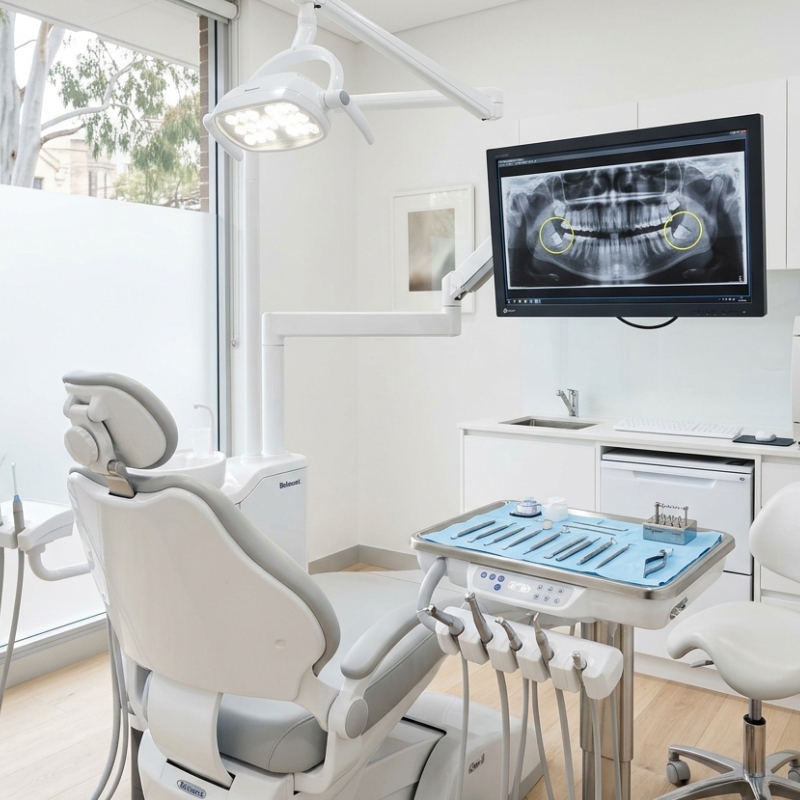
Sydney residents are booking wisdom tooth extractions earlier than ever, partly because imaging and anaesthetic choices keep improving. If your third molars have started to ache or your dentist has spotted crowding on a scan, you may be close to locking in a date. Before you do, it helps to understand how the procedure has shifted in the last year, what influences cost, and the downtime you should realistically plan for. Those insights appear below, along with clear answers to the questions our clinicians hear every week. If you still want more detail, visit our dedicated page on wisdom tooth removal for the clinical nuts and bolts.
Why 2026 Looks Different for Wisdom Tooth Extractions
Cone-beam 3-D imaging has gone from “nice extra” to routine at many Sydney surgeries. The scan gives a 360-degree view of nerve pathways, sinus proximity, and root shape, allowing dentists to pick a narrower surgical window and reduce trauma. Clinics that invested in these units during 2024–25 now complete the scan on-site, saving patients the referral runaround. That same tech guides sectioning of complex roots, meaning fewer gum flaps and, in many cases, shorter chair time.
Another change lands in the recovery phase. Dissolving collagen plugs, originally used in implant dentistry, are increasingly placed in extraction sockets to limit dry socket risk. They cost a bit extra but spare some patients a second appointment, which busy city workers often value more than the dollars.
Early Warning Signs to Act On
- Gum tenderness behind the second molars that flares when you chew toast or muesli
• Headaches that track from the jaw hinge up toward the ear, especially after long office days
• Crowding that suddenly appears on lower incisors even if you wore orthodontic retainers
Ignore those for six months and the roots can wrap around the inferior alveolar nerve, creating a higher chance of postoperative numbness. Booking while the tooth is still forming reduces that risk and usually halves the recovery window.
Anaesthesia and Comfort Choices
Sydney clinics typically offer three levels of cover: local anaesthetic only, local with oral sedation, or IV (“twilight”) sedation administered by a visiting medical anaesthetist. The middle ground has gained traction, thanks to fast-acting tablets such as triazolam that wear off inside four hours. Patients who dislike needles often pick this option because it avoids a cannula yet takes the edge off sounds and pressure.
A quick comparison appears below.
| Option | How it feels | Typical extra fee | Ride-home needed? |
| Local only | Awake, fully aware | Included | No |
| Oral sedation + local | Relaxed, drowsy | Modest | Yes |
| IV sedation + local | No memory of procedure | Higher | Yes |
Guideline only – individual quotes vary by tooth position and surgery time.
For more on when extraction is recommended, our earlier article on do all wisdom teeth need removal dives into risk factors for keeping versus removing them.
Typical Recovery Timeline for Working Adults
Day one: gauze changes stop within three hours; cheeks feel bulky from local anaesthetic.
Day two: swelling peaks; most patients manage with paracetamol and ibuprofen alternation.
Day three: stiffness eases enough for gentle toothbrushing around the site.
Day five: soft foods like pasta and ripe avocado go down easily; many return to desk work.
Day seven: sutures, if used, begin dissolving or are removed at a quick review visit.
Day ten: gym sessions and light runs usually resume without throbbing.
Planning tip: book the surgery mid-week. That way the worst swelling coincides with Saturday, and you rarely need more than two days off work.
Cost Factors Sydney Clinics Consider
Quoting exact figures without an examination is impossible, but five variables influence the final number:
- Position – fully erupted teeth are faster than horizontal impactions.
- Nerve map – roots hugging the nerve add surgical time.
- Anaesthetic choice – IV sedation incurs a separate anaesthetist fee.
- Number of teeth – removing all four in one sitting is generally cheaper per tooth than staging appointments.
- Extras – collagen plugs, platelet-rich fibrin, and take-home ice packs add small but helpful costs.
Private health rebates vary widely. Item numbers 323, 324, or 325 may apply; check your fund’s extras cover so there are no surprises.
FAQ – Straight Answers From Our Dentists
Will I be completely asleep?
Not always. Local anaesthetic blocks pain; IV sedation adds amnesia. General anaesthetic in hospital is reserved for complex cases or severe dental phobia.
How long until I can drive?
Twenty-four hours after any sedative medication. If you choose local only, you may drive once the numbness wears off and you feel clear-headed.
Can swelling be prevented?
Ice packs in the first 24 hours and sleeping propped on two pillows reduce it, but some puffiness is inevitable.
Do dissolvable stitches hurt coming out?
They soften and detach on their own. You might notice a harmless knot on the tongue side; simply brush gently, and it will pass.
For broader clinical guidance, the Australian government’s Healthdirect wisdom teeth guidelines outline when removal becomes medically necessary.
Booking With Confidence
Technology, sedative options, and socket-care materials have all improved in the past two years, making 2026 a favourable time to tackle impacted wisdom teeth. Scan-guided planning trims surgery length, while better recovery aids mean most Sydney patients lose less than a week of normal routine. Arm yourself with the facts above, confirm your health fund item numbers, and pick a mid-week slot so you can maximise that necessary rest window. Then you can step into the chair knowing exactly what to expect – and how quickly you will be back to your usual schedule.