
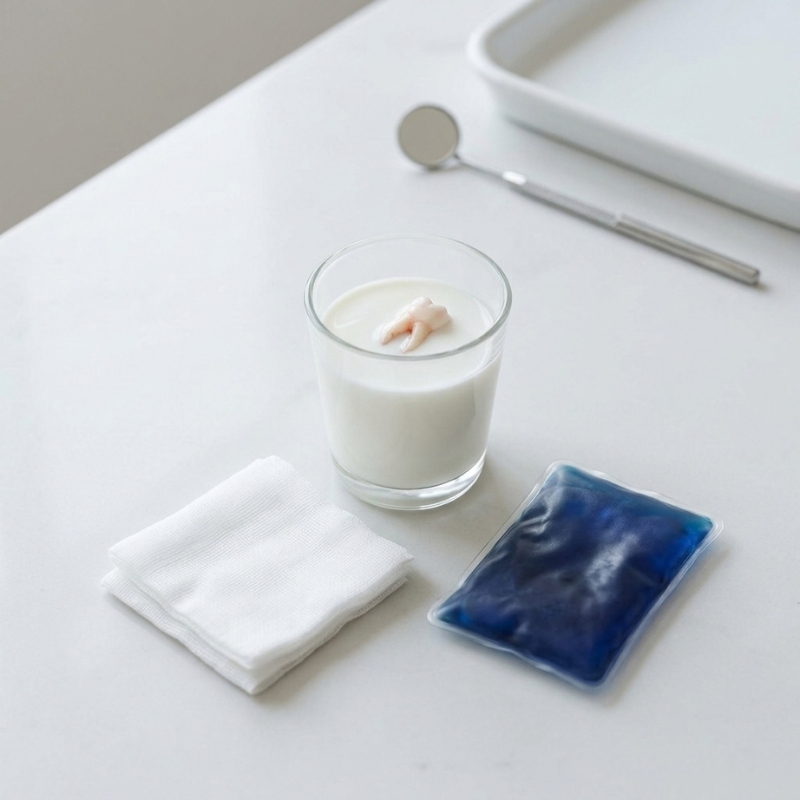
Something has just happened to a tooth, and you need to know what to do in the next few minutes: control the bleeding, keep a knocked-out tooth moist, use a cold pack for swelling, and ring a dentist straight away. That is the short answer, and the rest of this article walks through each situation properly, a knocked-out tooth, a broken or chipped tooth, and swelling, bleeding or pain while you wait, plus exactly what to tell the dentist when you call. Blue Mountains Dental & Implant Centre handles emergency dental appointments at our Wentworth Falls clinic, and the first hour often makes a real difference to what can be done, so it is worth knowing the right steps before you need them.
In the first hour, control bleeding with clean gauze and firm pressure, keep a knocked-out adult tooth moist in milk or saliva rather than water, use a cold pack on the outside of the face for swelling, and ring a dentist straight away to describe what has happened.
Work out whether this needs a dentist today
Not everything that happens to a tooth is urgent, but some things genuinely are, and knowing the difference tells you whether to act now or book in the usual way. Ring a dentist straight away if any of these apply:
- A knocked-out adult tooth. This is time-critical, and the steps below matter from the moment it happens.
- Bleeding that will not stop despite firm pressure held for a sustained period.
- Swelling that is spreading into the face or neck, which is a sign that needs prompt attention rather than waiting.
- A tooth broken with the nerve exposed, often very painful and sensitive to air and temperature.
- Pain that is getting worse rather than staying steady, since escalating pain usually means something is progressing.
If one of these is happening, the sensible move is to phone and describe it rather than deciding for yourself whether it can wait. A dentist can tell quickly from what you describe how urgent it is and what to do in the meantime. The situations that can usually wait for ordinary clinic hours, like a lost filling with no pain, are covered further down. When in doubt, a phone call costs nothing and takes the guesswork out of it.
A knocked-out tooth: the first fifteen minutes
A knocked-out adult tooth is the situation where what you do in the first few minutes matters most, so stay calm and work through it in order.
- Pick the tooth up by the crown, not the root. The crown is the part that is normally visible in the mouth. Avoid touching the root, because the cells on the root surface are delicate and easily damaged.
- Rinse it gently only if it is dirty. A brief, gentle rinse to remove grit is fine, but do not scrub it and do not wrap it in tissue, which can strip those root cells.
- Try to place it back in the socket. If you can, position the tooth back where it came from, the right way round, and hold it gently in place by biting softly on clean gauze. The socket is the best place for it.
- If you cannot reseat it, keep it moist in milk or saliva. Milk is ideal, or the person’s own saliva held in the cheek if they are old enough to do so safely. Do not store it in water, which damages the root cells.
Time matters here, so the tooth should be seen as soon as possible rather than left until later. Keep it moist the entire way, and ring the dentist while you are on your way or getting ready to go.
A broken or chipped tooth
A broken or chipped tooth is distressing but usually less time-critical than one that has come out entirely, and a few simple steps help protect it until it can be looked at.
First, keep any fragment that has broken off. Pop it in a small container, in milk or saliva if you can, because the dentist may be able to use it. Next, rinse your mouth gently with warm water to clear away any debris and let you see what has happened. If there is a sharp edge that is cutting your tongue or cheek, you can cover it temporarily with a piece of sugar-free chewing gum or a bit of dental wax to stop it causing further irritation.
While you wait to be seen, avoid chewing on that side and steer clear of very hot, very cold or hard foods, which can trigger sensitivity or worsen the damage. If the break is deep enough to expose the nerve, or it is painful, treat it as more urgent and ring the clinic to describe it. Even a chip that is not sore is worth having checked before it progresses.
Swelling, bleeding and pain while you wait
While you are waiting to be seen or to get to the clinic, there are a few things that genuinely help. For swelling, hold a cold pack against the outside of the cheek over the affected area, and sit upright rather than lying flat, since lying down can make throbbing and swelling feel worse. For bleeding, apply firm, steady pressure with clean, folded gauze over the site and hold it without lifting to check for a sustained period, because repeatedly peeling it away restarts the bleed.
For the pain itself, managing it sensibly in the meantime makes the wait more bearable. Rather than repeat the detail here, we have a separate guide on which pain relief works best for a dental emergency that walks through the options. One thing to watch with swelling: if it is spreading towards the eye or down into the neck, or it comes with difficulty swallowing or breathing, that is beyond ordinary first aid and needs urgent medical attention without delay.
What to tell the dentist when you ring
When you phone, having a few details ready helps the dentist understand how urgent it is and what to advise, so the call is quick and useful. Have ready:
- What happened and when, including the rough time, since timing affects what can be done for some injuries.
- Which tooth or teeth are involved, and whereabouts in the mouth.
- Whether there is swelling or bleeding, and if so, whether it is getting worse or settling.
- What has already been taken or done, including any pain relief and whether you have the tooth or fragment kept moist.
- Any relevant medical history, such as medicines you take, bleeding conditions or allergies.
Giving this clearly at the start means the dentist can tell you what to do on the spot and get you seen at the right level of urgency, rather than working it out piece by piece. If you are unsure about anything, say so, since it is better to describe it plainly than to guess.
Frequently Asked Questions
Should I put a knocked-out tooth in water?
No. Water damages the cells on the root surface. Milk or the person’s own saliva is better, and the best place of all is back in the socket if it will sit there.
How long do I have to save a knocked-out tooth?
The sooner it is back in place the better the outlook, so treat it as something to act on immediately rather than something that can wait until morning.
What should I do about swelling in my face?
Use a cold pack on the outside of the cheek and sit upright rather than lying flat. Swelling that is spreading towards the eye or the neck, or that comes with difficulty swallowing, needs urgent attention.
Is a lost filling an emergency?
Not usually, but it should not wait long. The exposed tooth is more likely to chip or become sensitive, so ring during clinic hours and get it replaced.
Acting in the first hour
The first hour comes down to a few clear actions: work out whether it needs a dentist today, keep a knocked-out tooth moist in milk or saliva and try to reseat it, protect a broken tooth and keep any fragment, and manage swelling and bleeding with a cold pack and firm pressure while you wait. Having these steps straight means you can act calmly rather than scramble. If you would like a written quote, ring us about an urgent appointment at our Wentworth Falls clinic.