
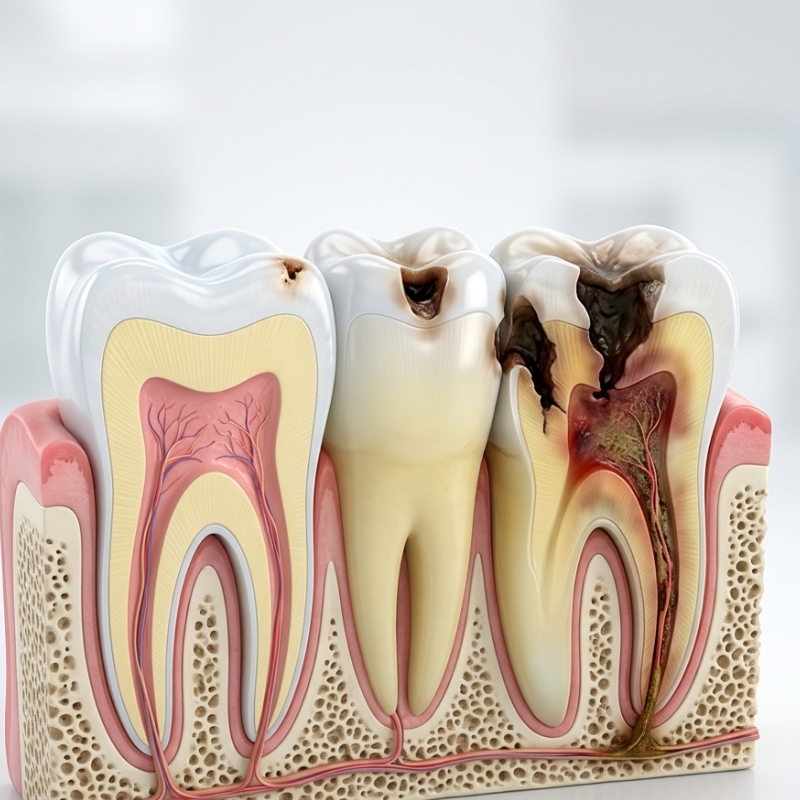
Ignoring a bit of sensitivity or a shadow your dentist spotted on last year’s X-ray might not feel urgent, especially when life is busy and dental pain comes and goes. Yet that “harmless” spot of decay is already an infection working its way through layers of enamel and dentine. Given enough time, bacteria reach the pulp, infection spreads to the bone, and the only safe way to remove the pain is often extraction. At that point you are suddenly booking after-hours emergency dental care instead of a quick weekday filling.
In the Blue Mountains, where weekend bushwalks and long commutes make it easy to postpone routine check-ups, understanding how quickly decay accelerates can save both teeth and money. This article explains the step-by-step progression from tiny cavity to emergency, highlights warning signs most patients miss, and offers practical actions you can take right now to protect your natural smile.
What Actually Happens When a Cavity Starts?
A cavity is simply an area where oral bacteria have dissolved minerals out of enamel. It usually begins in the microscopic pits and grooves on chewing surfaces or between teeth where plaque lingers.
Enamel is the hardest substance in the body, but it has no nerve endings. When decay is confined to enamel, you rarely feel pain. That silent start is what makes delaying treatment so tempting and so risky.
Early Decay Stages Explained
- Demineralisation: Mineral loss creates a white, chalky spot, but the surface remains intact.
- Enamel Decay: The surface collapses, creating a small hole.
- Dentine Involvement: Bacteria reach the softer inner layer. This is when cold or sweet sensitivity often begins.
At this point, a simple filling or sealant can fully restore the tooth within 20 to 30 minutes.
Why a Small Cavity Often Doesn’t Hurt (Yet)
Many Blue Mountains locals only ring the clinic when pain wakes them at night. Unfortunately, pain is a late symptom.
• Enamel contains no nerves, so early acid attack stays silent.
• Dentine has tiny tubules that lead to the pulp. Irritation here may only feel like fleeting twinges.
• The pulp, housing nerves and blood vessels, reacts strongly once bacteria penetrate. That is when throbbing, swelling, and sometimes facial cellulitis erupt.
By the time you feel continuous pain, infection is usually well established.
Bacteria’s Race to the Pulp: Typical Timeframes
Every mouth is different. Oral hygiene, diet, saliva flow, and fluoride exposure all matter. Still, untreated cavities follow a predictable path:
| Stage | Approximate Timeline* | What You Might Notice |
| Surface demineralisation | Weeks to months | Faint white or brown spot, often unseen |
| Enamel cavity <1 mm | 6 – 18 months | No pain, maybe floss catches |
| Dentine involvement | 3 – 6 months after enamel breach | Cold or sweet sensitivity |
| Pulpal inflammation | Days to weeks after dentine exposure | Intermittent ache, night pain |
| Acute pulp infection | Hours to days | Throbbing, temperature sensitivity flips, painkillers wear off faster |
| Abscess and bone spread | Days to weeks | Swelling, bad taste, limited mouth opening, possible fever |
*Timings vary with oral hygiene, sugar intake, and individual immunity.
Notice how the jump from mild sensitivity to full infection can be measured in days once bacteria breach the pulp.
Warning Signs Your Cavity Is Becoming an Emergency
Not every small cavity screams for attention, yet several red flags suggest the tooth is transitioning from simple fix to complex rescue.
Below is a quick comparison table to help you decide whether to call for a prompt appointment.
| Symptom | Likely Severity | Suggested Next Step |
| Pain only with ice-cold drinks subsides quickly | Early dentine irritation | Book filling within the month |
| Short, sharp pain plus lingering ache | Deep dentine, possible pulp irritation | Schedule restoration within 1 – 2 weeks |
| Night-time throbbing needing painkillers | Irreversible pulpitis | Same-day assessment, likely root canal or extraction |
| Swelling or pimple on the gum | Localised abscess | Urgent appointment within 24 hours |
| Facial swelling, difficulty swallowing | Spreading infection | Hospital or dentist immediately |
Complications That Turn Delay into Extraction
- Irreversible Pulpitis
Once bacteria infect the pulp, inflammation cuts off the blood supply inside the rigid shell of dentine. The pulp dies, making root canal therapy or extraction the only options. - Abscess Formation
Pus collects at the tip of the root. Pressure causes severe pain, and the infection can track into the jawbone or soft tissues of the neck. - Tooth Fracture
Decay weakens structural walls. Biting on a crusty sourdough loaf during a Leura café brunch can split the remaining shell, leaving insufficient tooth for restoration. - Sinus or Airway Spread
Upper molar infections may drain into the maxillary sinus, causing congestion. Lower molar abscesses can swell the floor of the mouth, compromising the airway.
When any of these occur, extraction may be the fastest, safest way to eliminate pain and prevent systemic spread.
Common Mistakes That Accelerate Decay
Busy lifestyles and well-meant online hacks can speed up the bacteria’s timetable.
• Skipping six-monthly check-ups because the tooth “feels fine.”
• Using sensitivity toothpaste as a permanent band-aid instead of fixing the hole.
• Sipping soft drinks or sports drinks throughout the day, especially on mountain bike trails.
• Chewing on the opposite side, allowing decay to progress unnoticed.
• DIY temporary filling kits left in for months, trapping food and bacteria.
Avoiding these traps gives your teeth a fighting chance.
Early Intervention Options That Keep Extractions Off the Table
Timely treatment is cheaper, faster, and more comfortable. Depending on depth, your dentist may recommend:
- Remineralisation Therapy
High-fluoride varnish or casein phosphopeptide pastes can rebuild enamel in the earliest stage. - Composite Filling
Once a small hole appears, cleaning and bonding a tooth-coloured resin usually resolves the issue. - Inlay or Onlay
For moderate decay on molars, lab-made porcelain or composite sections reinforce chewing strength. - Root Canal Treatment
If infection reaches the pulp but the tooth structure is salvageable, cleaning and sealing canals can retain the tooth.
For a deeper dive into spotting problems sooner, see our guide on early signs of tooth decay — this link may need a quick manual check against the latest blog list before publishing.
Decision Framework: Fill, Root Canal, or Extract?
Choosing the right treatment involves weighing urgency, cost over time, and long-term oral health. The table below summarises core considerations.
| Option | Typical Scenario | Procedure Length | Longevity With Care | Key Pros | Watch Outs |
| Small filling | Decay limited to enamel or shallow dentine | 20 – 40 min | 5 – 10 years | Least invasive, affordable | Needs good brushing |
| Large filling or onlay | Moderate dentine loss but walls stable | 40 – 90 min | 8 – 15 years | Preserves tooth, strong | Higher fee, needs wear checks |
| Root canal + crown | Pulp infected, root intact | 2 – 3 visits | 10 + years | Saves natural tooth | Upfront cost, after-care vital |
| Extraction + implant | Tooth non-restorable | 1 visit + healing | Lifetime with good care | Stops pain quickly, high success | Surgical, higher total fee, healing time |
Questions to Ask at Your Next Check-Up
• Can you show me images of the cavity and explain its depth?
• What is the risk of fracture if we delay?
• Which restoration will best handle my chewing habits and bushwalking snack routine?
• How will this treatment affect neighbouring teeth?
• What maintenance do I need to maximise lifespan?
Clear answers help you make confident, cost-effective choices.
Official Advice on When Pain Becomes an Emergency
According to the Australian Dental Association, swelling that affects breathing, fever above 38 °C, or uncontrolled bleeding are all signs you should seek immediate professional care rather than waiting for a routine slot. If in doubt, call your dentist or, after hours, the nearest hospital emergency department.
FAQs
1. Can a cavity heal on its own?
Early demineralisation can sometimes be reversed with fluoride and improved hygiene, but once a physical hole forms, the body cannot regrow enamel. A dentist needs to remove the decay and seal the tooth.
2. How long can I wait before a filling becomes urgent?
There is no universal deadline. Some cavities progress slowly over years; others rocket through dentine in months, especially if your diet is high in fermentable carbohydrates. A check-up every six months is the safest rhythm.
3. Are home remedies like clove oil safe for a toothache?
Clove oil may numb pain briefly, but it does not remove bacteria or infection. Overuse can burn gum tissue. Use it as a temporary measure only while arranging prompt dental care.
4. Will a root canal always prevent extraction?
Root canals have a high success rate when infection is confined within the tooth. If decay has cracked the root or severe bone loss exists, extraction may still be required. Your dentist will assess radiographs before deciding.
5. Does private health insurance cover fillings or root canals?
Most Australian extras policies include a set annual limit for general or major dental work. Coverage, waiting periods, and gap payments vary, so check your individual policy or ask the front desk to provide an item-number quote for your insurer.
Final Thoughts
A cavity never stands still. Catch it early, and you spend a single lunchtime in the chair. Ignore it, and you might face weekend agony, antibiotics, and the loss of a tooth you will need — and pay to replace — for the rest of your life. Regular six-monthly check-ups, prompt treatment of any new spots, and good daily brushing and flossing habits are still the simplest way to keep extractions off your calendar. If you notice lingering pain, swelling, or sudden sensitivity that will not settle, arranging a timely appointment could save both your smile and your wallet.