
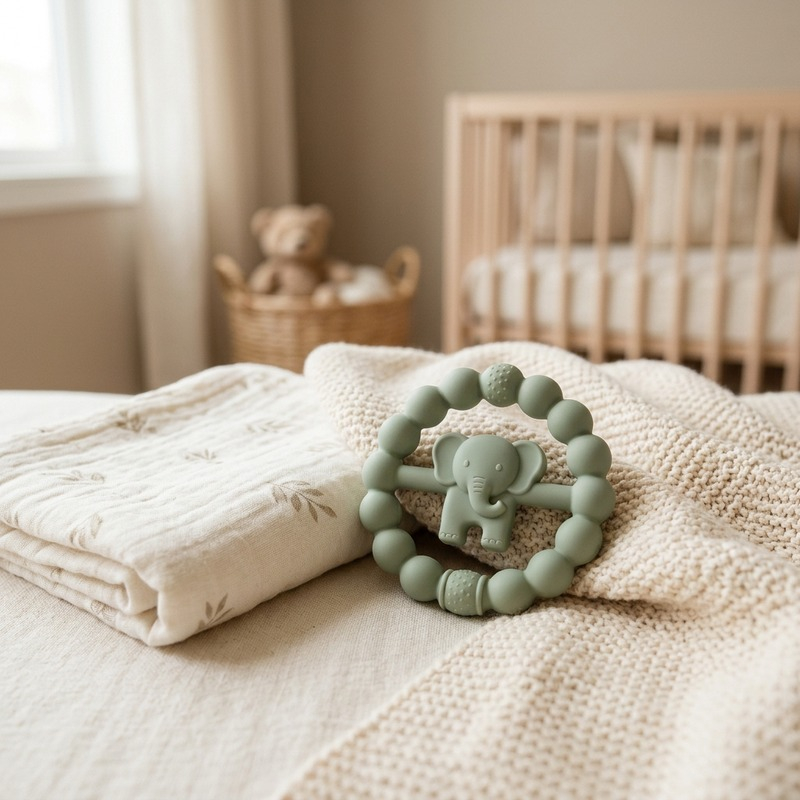
When parents ask how to help a teething baby settle, the general guidance from raisingchildren.net.au and the NHS comes down to simple comfort and plenty of patience rather than anything clever. Something clean, firm and cool to chew on, gentle pressure on the gums with a clean finger, extra cuddles and holding, a bit more distraction through the day, and wiping dribble away so the skin around the mouth does not get sore. That is most of it. I think the hardest part of teething is not the technique, it is the stretch of unsettled days and nights where nothing you try seems to work twice. Teething is also a reasonable moment to start thinking about when to book your child’s first dental visit, because those first teeth need looking after from the day they arrive.
What is actually happening
Teething is the process of the first teeth moving through the gum. Both raisingchildren.net.au and the NHS describe it as something that usually begins in the second half of the first year, with the full set of baby teeth generally in place by around two and a half to three years of age. The timing varies enormously between children, and an early or late start is usually just that, a variation, not a sign that something is wrong.
It is also worth saying what teething is not. It is not an explanation for everything that happens during a long stretch of a baby’s first years. Dribbling, chewing on things, red cheeks and some gum tenderness are commonly described in parent information as part of the picture, but plenty of other things happen in the same months. Deciding which of your baby’s symptoms are teething and which are not is not something an article can do, and that distinction matters, which I will come back to.
Comfort measures parents can try
Most of the answer to how to help teething baby discomfort is practical rather than medical. These are the general measures that come up consistently in parent health information, and the useful thing about all of them is that they are low risk.
Something to chew on helps because pressure on the gum is soothing. A clean, firm teething ring or a solid teething toy designed for the purpose is the usual suggestion. Some parents chill a teething ring in the fridge, and general guidance is clear that it should be refrigerated rather than frozen, because something frozen solid is hard enough to hurt the gum. Check anything you give your baby for cracks or loose parts first.
Gentle pressure from a clean finger rubbed over the gum works on the same principle and costs nothing. For babies already eating solid food, parent information often mentions cool pieces of firm vegetable or fruit to gnaw on, always with you watching closely because of the choking risk, and always appropriate to what your baby is already eating.
Managing the dribble is the unglamorous one that makes a real difference. Patting the chin and neck dry with a soft cloth through the day helps prevent the rash that develops when skin stays wet.
And then there is comfort itself. Extra holding, more cuddles, a bit of distraction with something new to look at, and a predictable, calm wind down in the evening all help an unsettled baby, even when they do not fix anything. There is no prize for getting through this unassisted, and getting the whole family onto the same check up rhythm is one less thing to organise separately once your routine starts to settle again.
What to be cautious about
This is the part where I will deliberately not give you product names. There are teething medicines, gels and remedies marketed to parents, and whether any of them is appropriate for your baby is a decision for a pharmacist, GP, child health nurse or dentist who can ask about your child’s age, weight and health. I am not going to name a medicine, a dose or a gel here, and you should be wary of any article that does.
What general guidance does caution against is clear enough. Amber teething necklaces and similar jewellery are widely advised against by child health authorities because of strangulation and choking risk, and because there is no good evidence that they help. Anything frozen hard, anything small enough to be swallowed, anything that can break into pieces, and anything a baby is left alone with around their neck or in their mouth all carry a risk that is not worth taking.
It is also sensible not to let teething become a blanket explanation. If your baby seems genuinely unwell, with fever, diarrhoea, vomiting, a rash, poor feeding, unusual drowsiness or inconsolable crying, that is a reason to contact your GP, a child health service or your local health line rather than to assume teeth are responsible. Parent information from both raisingchildren.net.au and the NHS makes that point for good reason.
Caring for teeth once they arrive
The teeth that cause all this trouble need cleaning from the moment they appear. General guidance is to start cleaning that first tooth straight away with a soft, small brush, and to make it a twice daily habit, built into the morning and the bath time routine so it becomes ordinary rather than a negotiation. Whether and when to use toothpaste, and how much, depends on your child’s age and circumstances, so ask your dentist or child health nurse for guidance specific to your child.
Habits around sleep and feeding matter too. Putting a baby to bed with a bottle of anything other than water is something parent health information consistently advises against, because liquid pooling around new teeth overnight is how early decay starts.
Then there is the household example. Children copy what they see, and brushing alongside a parent is more effective than being told about it. Keeping your own care on track, whether that is a scale and clean for the adults in the house or just not skipping your own appointments, makes the whole thing feel normal.
Frequently asked questions
At what age do babies start teething?
Parent information from raisingchildren.net.au and the NHS describes teething as typically beginning in the second half of the first year, with most children having their full set of baby teeth by around two and a half to three years. The spread is wide, and starting earlier or later than other babies is usually just normal variation.
Does teething affect sleep?
Many parents working out how to help a teething baby’s discomfort find that sleep is where it shows up most. Many parents report unsettled nights during teething, and general parent guidance acknowledges that discomfort can disturb sleep. It is worth keeping in mind that babies’ sleep changes for many other reasons in the same months. If your baby’s sleep changes sharply or they seem unwell, speak to a child health nurse or GP rather than assuming teeth are the cause.
What are the signs a baby is teething?
Commonly described signs include more dribbling than usual, chewing and gnawing on things, a tender or slightly swollen gum, flushed cheeks and being generally more unsettled. These are general descriptions, not a checklist, and this article cannot tell you whether what your baby is experiencing is teething. Anything that worries you should be assessed by a health professional.
When should I see a dentist about my baby’s teeth?
General Australian guidance is to have a first dental visit early, around the first birthday or within six months of the first tooth appearing, and to continue at the intervals your dentist advises. Book sooner if you notice marks, discolouration or chips on a tooth, if your child has mouth pain, or if you have any concern at all about how the teeth are coming through.
Talk to someone who can see your child
This article is general information and is not a substitute for individual dental or medical advice. If your baby is unwell, speak to your GP or child health service. For the teeth themselves, the team at Blue Mountains Dental & Implant Centre has been caring for Blue Mountains families for 30 years and is happy to see children for an early, unhurried first look. Get in touch to arrange a visit.