
You brush, you floss most nights and you book a check-up when you remember. Then a dull ache starts, or you chip a tooth on a stray macadamia. Suddenly, “going to the dentist” is not a single option. Should you book a routine clean, ask about a filling, consider whitening or head straight to an emergency clinic? The answer depends on matching the problem, your goals and your timeline with the right branch of dentistry. This guide breaks down the main categories of care, the warning signs to watch for and the practical questions that help you feel confident before your appointment. Along the way, you will find easy tables, local Sydney context and pointers to our range of dental services if a professional assessment looks like the next logical step.
1. The Main Categories of Dental Care at a Glance
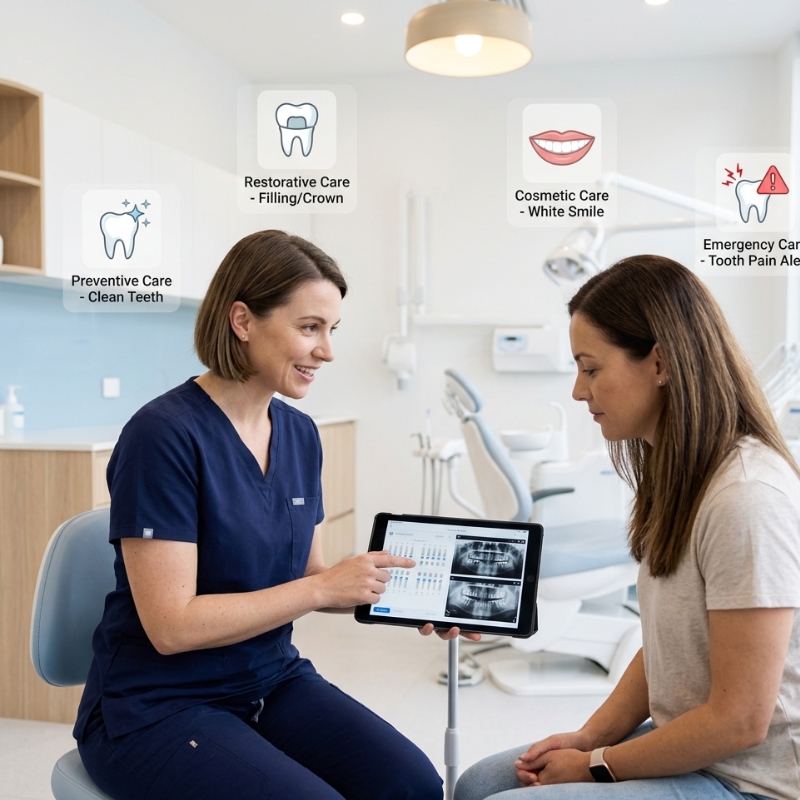
Dentistry covers far more than six-monthly check-ups. Most treatments fall into four broad categories.
| Dental Care Category | Typical Purpose | Common Examples | When It Is Usually Recommended |
| Preventive care | Stop problems from starting or worsening | Check-ups, cleans, fluoride application, fissure sealants, custom mouthguards | Every 6–12 months or before starting contact sports |
| Restorative care | Fix damage or decay and restore function | Fillings, crowns, bridges, root canal therapy, implants | When a tooth is cracked, decayed or missing |
| Cosmetic care | Improve the appearance of healthy teeth | Whitening, veneers, minor alignment options, and composite bonding | When shape or colour bothers you, but function is fine |
| Emergency care | Relieve acute pain or prevent rapid deterioration | Severe toothache relief, knocked-out tooth re-implantation, and sudden swelling management | As soon as possible, often the same day |
Why it matters
Knowing these categories helps you narrow the field before you even pick up the phone. For example, a small chip with no pain is often restorative, whereas overnight throbbing that stops you sleeping is likely emergency territory.
2. Minor Irritation or Urgent Issue? Signs to Watch
Mild twinges can sometimes wait a few days, but certain red flags call for faster action.
| Sign or Symptom | Likely Severity | Suggested Next Step |
| Brief sensitivity to cold that fades quickly | Usually minor | Note the pattern and mention it at your next check-up |
| Sensitivity that lingers after the trigger is gone | Moderate concern | Book a standard appointment within the week |
| Pain that wakes you at night or needs painkillers | Higher concern | Call your dentist the same day |
| Facial swelling, fever or difficulty swallowing | Emergency | Seek immediate professional care or hospital |
Sydney tip
Seasonal allergies, high pollen or the cold Blue Mountains winter can make teeth feel more sensitive. If the symptom improves when the season changes, still mention it at your next visit to rule out early decay under enamel.
3. Factors That Influence the Right Treatment for You
Choosing between two seemingly similar options is easier when you break the decision into practical considerations.
3.1 Current Oral Health Status
• Extent of decay or damage shown on X-rays
• Gum health and bone density (important for implants)
3.2 Long-Term Goals
• Aesthetics versus pure function
• Desire for low-maintenance solutions
• Willingness to attend multiple visits
3.3 Lifestyle and Habits
• Sports participation (mouthguard or protective crown)
• Coffee, tea or red wine intake (whitening may relapse sooner)
• Night-time grinding (could chip some cosmetic materials)
3.4 Time Constraints
• Urgent events like weddings or job interviews
• Travel plans that limit follow-up visits
3.5 Health Fund Cover and Out-of-Pocket Comfort
While this guide avoids dollar figures, knowing your annual limits or waiting periods can affect the order of treatments. Ask your provider about item numbers before consenting.
4. Preventive vs Reactive Care: The Timing Equation
Some people wait for pain before acting. Others schedule a clean like clockwork. Here is how timing changes both the cost and complexity of care.
| Approach | Upfront Visit Length | Future Risk of Extensive Work | Comfort Level | Typical Example |
| Preventive (check-ups, early sealing) | Short (30–60 min) | Low | High | Removing plaque before it hardens |
| Early restorative (small filling) | Moderate (45–75 min) | Medium | Moderate | Rebuilding enamel before decay hits nerve |
| Reactive (root canal, extraction) | Longer (1–2 hrs, multiple visits) | High | Variable | Treating infected pulp after delayed care |
Further reading
If you want a deeper look at how prevention pays off in the long run, our blog on preventive dental treatments outlines common options and their benefits.
5. Common Mistakes People Make When Choosing Dental Treatments
- Waiting until pain is unbearable then hoping for a quick fix
- Assuming all whitening products meet Australian standards
- Browsing social media before getting professional X-rays
- Overlooking gum health while focusing only on visible teeth
- Forgetting long-term maintenance such as new crowns outlasting neglected gums
Avoiding these pitfalls usually starts with an honest conversation about habits, expectations and medical history.
6. Questions That Clarify Your Best Option
Bringing a list to your appointment keeps the chat focused and reduces decision stress.
| Question | Why It Helps |
| What result can I realistically expect from this treatment? | Sets clear outcome boundaries |
| Are there simpler or earlier interventions I could try first? | Tests whether timing is right |
| How will this option affect nearby teeth or gums over time? | Prevents chain-reaction issues |
| What follow-up is required and what happens if I skip it? | Reveals long-term commitment |
| How urgent is this procedure based on my X-rays and symptoms? | Distinguishes preference from necessity |
7. Local Considerations for Sydney and Blue Mountains Residents
• Fluoridated water varies across NSW. If you live in a non-fluoridated zone, your dentist may suggest topical fluoride varnish more often.
• Mountain air is dry and can exacerbate mouth breathing at night, raising decay risk. Saliva substitutes or simple hydration habits may be discussed.
• Public dental waiting lists in Greater Sydney can stretch over a year for non-urgent cases. If a problem is moving from mild to moderate, early private care can sometimes prevent an emergency situation.
• The Blue Mountains tourism workforce often works shifts, making evening or Saturday appointments critical. Many private practices now cater for this demand.
8. Knowing When Professional Help Is Non-Negotiable
Online advice, home kits and chemist pain relief have a place, but there are limits.
• Bleeding that lasts more than two days
• Sudden change in tooth colour following injury
• Persistent bad taste with or without swelling
• Over-the-counter whitening causing gum burns
Australian guidelines on home dental kits, summarised by Healthdirect, note that any worsening pain or sensitivity after DIY treatment should be reviewed by a dentist rather than self-managed.
Frequently Asked Questions
1. How often should I review my treatment plan with my dentist?
A quick check at every six-monthly visit is usually enough, but review sooner if symptoms change, you begin new medication or your lifestyle shifts (such as taking up contact sports).
2. Can cosmetic dentistry damage healthy teeth?
When planned carefully, cosmetic procedures like whitening or veneers are safe for healthy enamel. Damage usually occurs when people overuse bleaching gels or file their own teeth at home. A professional exam first rules out hidden decay that could worsen under cosmetic layers.
3. Does dental anxiety limit my treatment choices?
Not at all. Modern practices offer options like inhalation sedation or staged appointments. Let your dentist know early so they can schedule extra time and use calming techniques.
4. Is emergency dental care covered by Medicare in Australia?
Medicare does not typically cover adult dental services. Some hospital emergency departments can address severe infections, but follow-up dental care is usually private or via public dental clinics, subject to eligibility and waiting lists.
5. What is the safest age for children to start whitening?
Most dentists recommend waiting until at least 18 years old when all adult teeth and enamel maturity stabilise. Even then, professional supervision is essential to protect gum tissues and avoid uneven colour.
Final Thoughts
Matching the right dental care to your needs is part early detection, part honest goal-setting and part expert guidance. Use the tables and questions above to narrow your choices, keep notes on any new symptoms and act promptly when red flags appear. If the issue goes beyond simple monitoring, a tailored plan from a qualified dentist will save you discomfort, time and often money in the long run.